16 Cozy Boho Kitchen Ideas That Make Small Spaces Feel Warm and Stylish
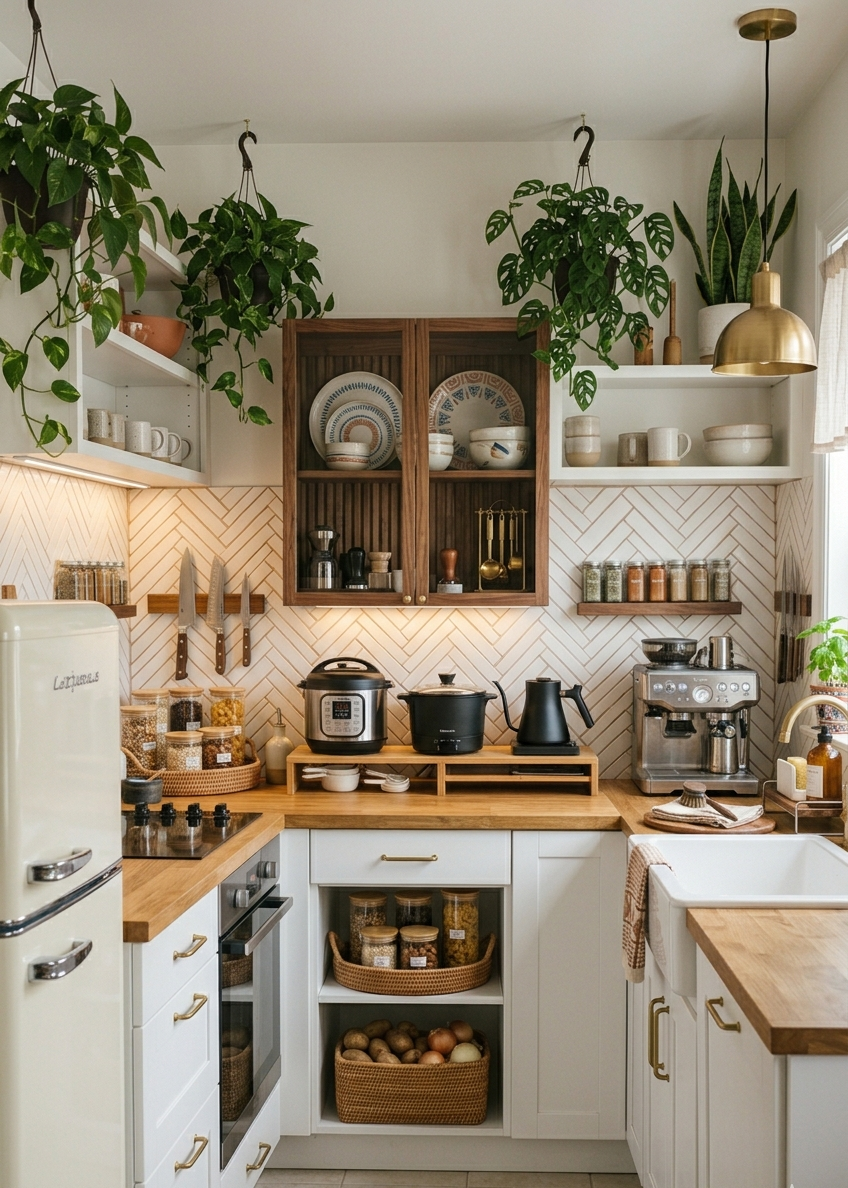
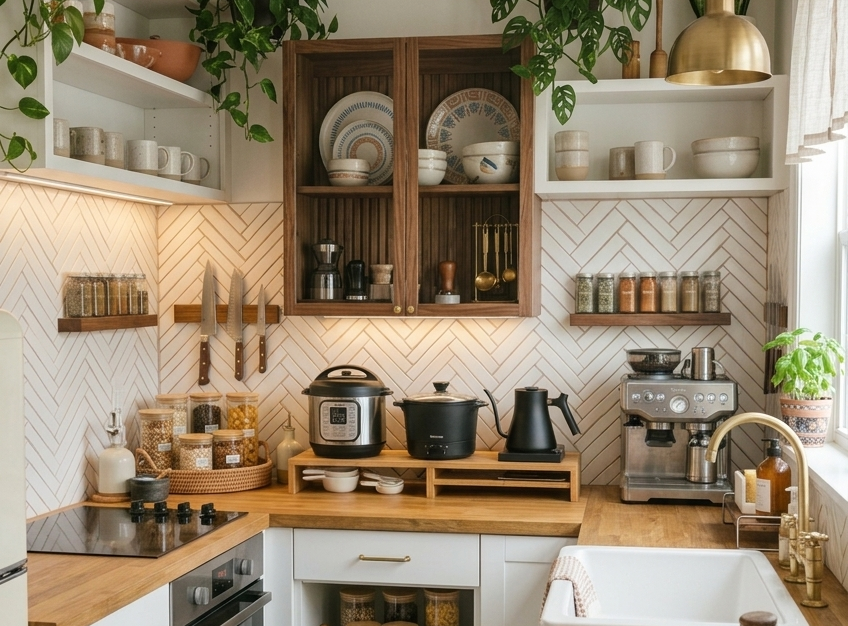
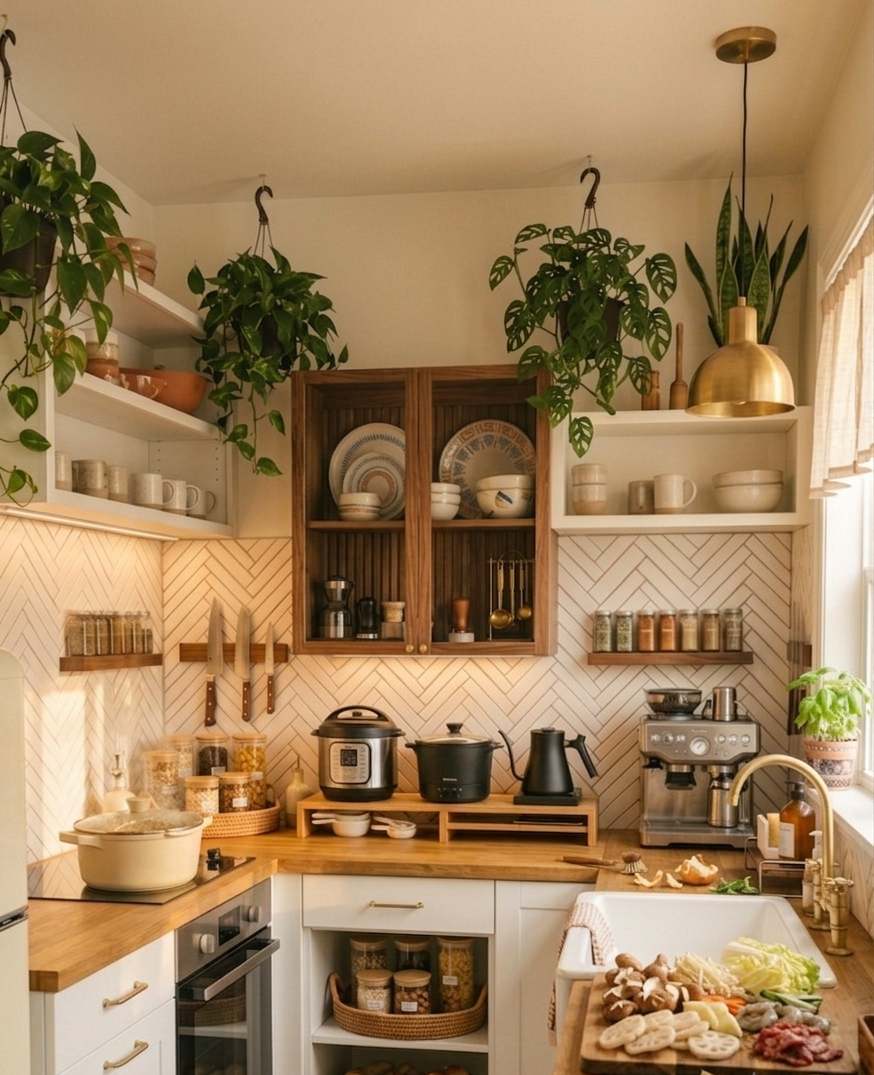
This kitchen works because it doesn’t try too hard.
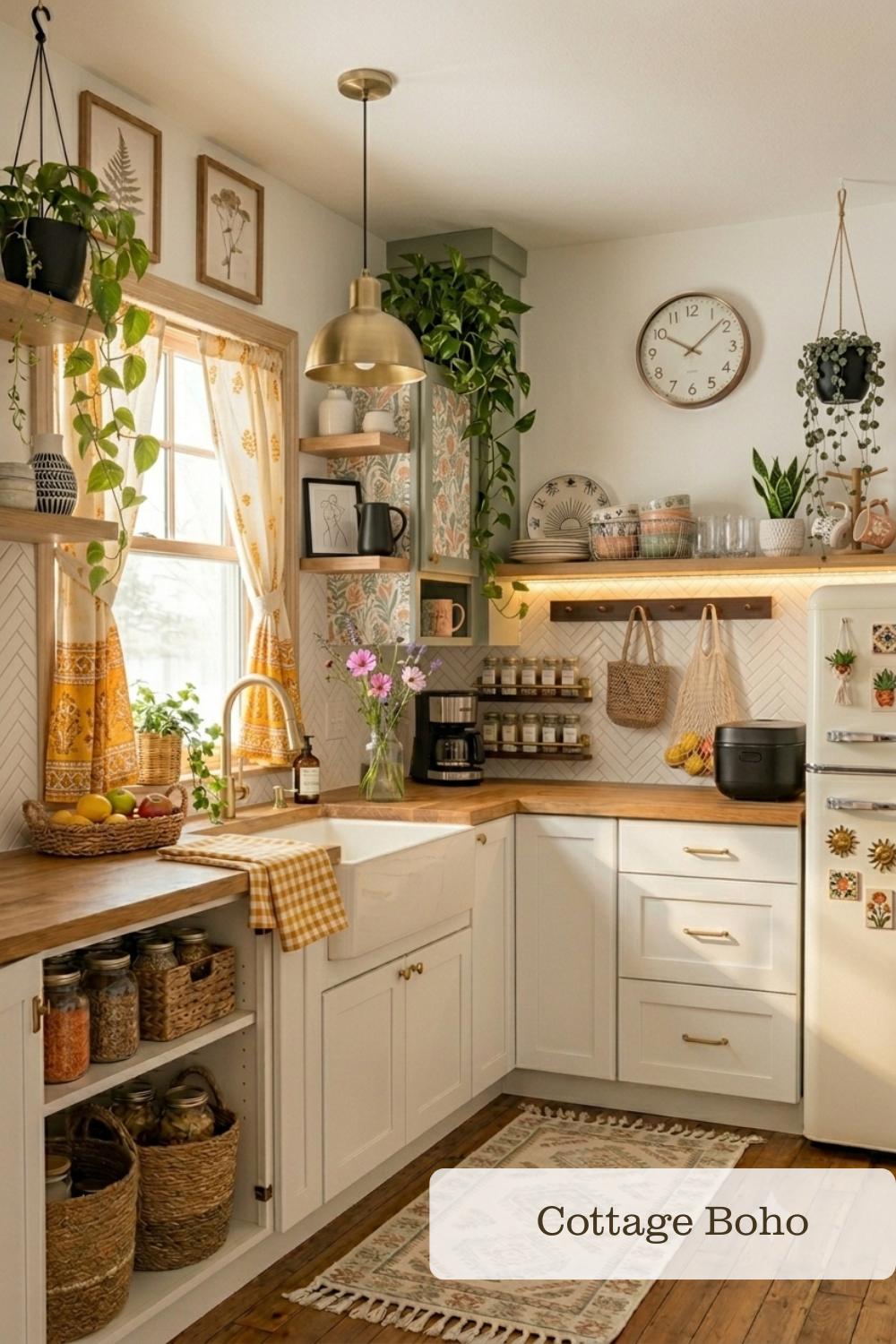
It balances warmth and function in a small footprint, using natural textures, layered wood tones, and greenery to keep the space from feeling flat or overly staged.
Nothing is purely decorative here — everything feels like it belongs in daily use.
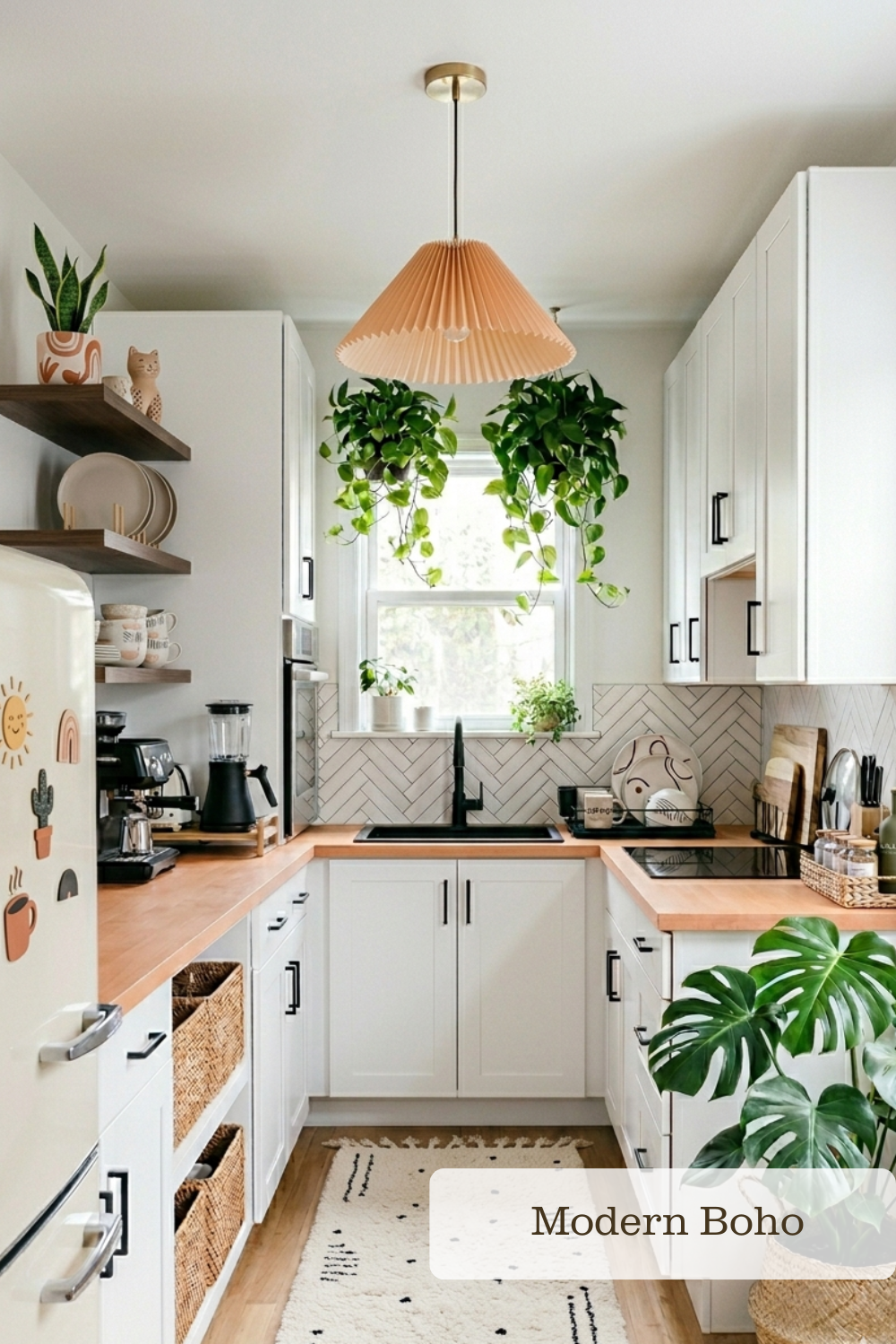
1. Hanging Plants That Add Height
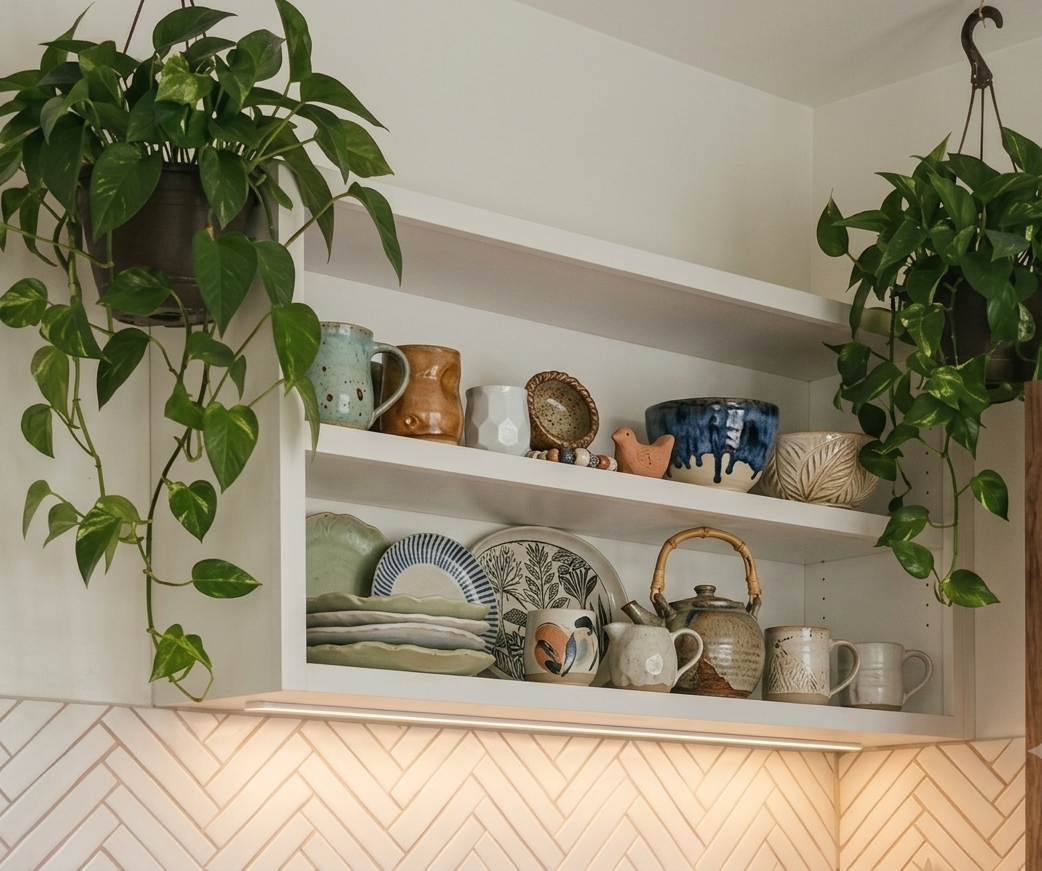
The trailing plants are doing more than decorating.
They pull the eye upward and make the ceiling feel higher, which is especially effective in a compact kitchen where vertical space matters.
2. A Calm, Natural Palette
The color story stays restrained:
Warm white, soft oak, walnut brown, muted green, and brass.
Nothing is loud — everything blends.
3. Mixed Wood Tones for Depth
Light butcher block counters sit against deeper wood cabinetry and accessories.
Because the tones don’t match perfectly, the kitchen avoids that “flat showroom” look and feels more lived-in.
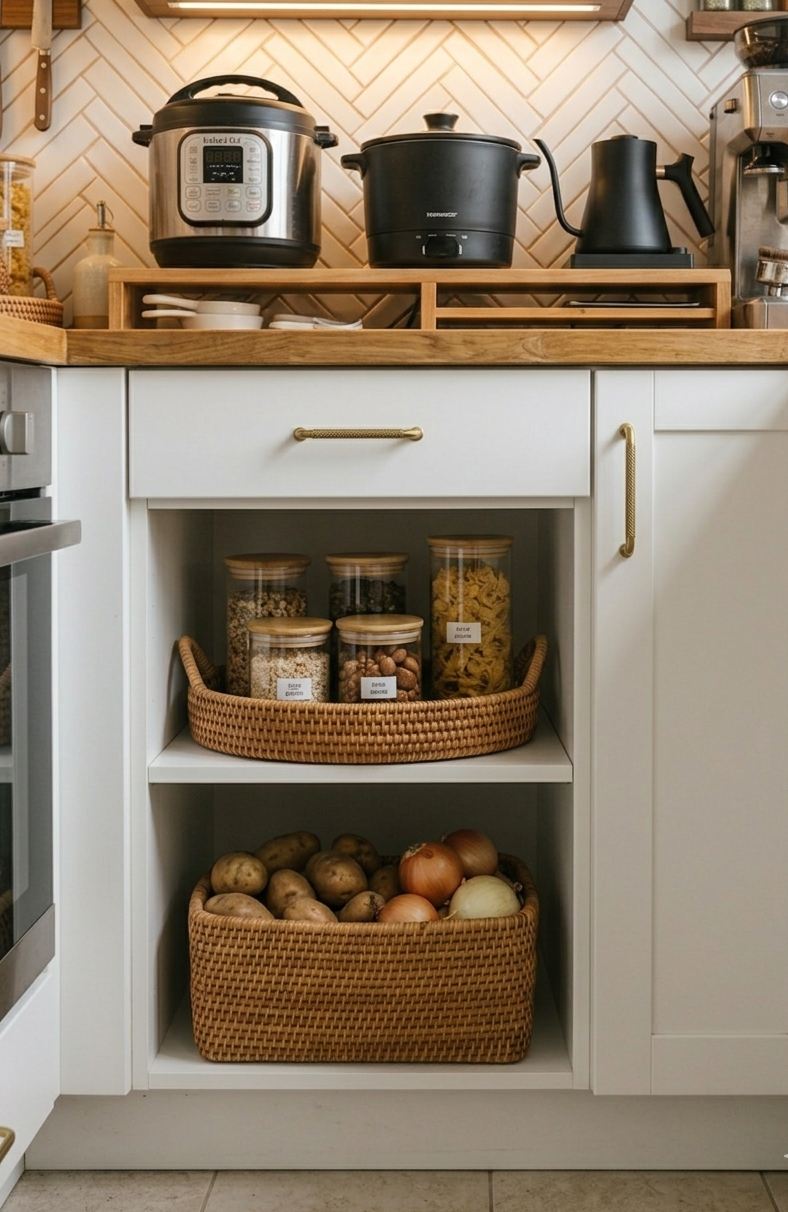
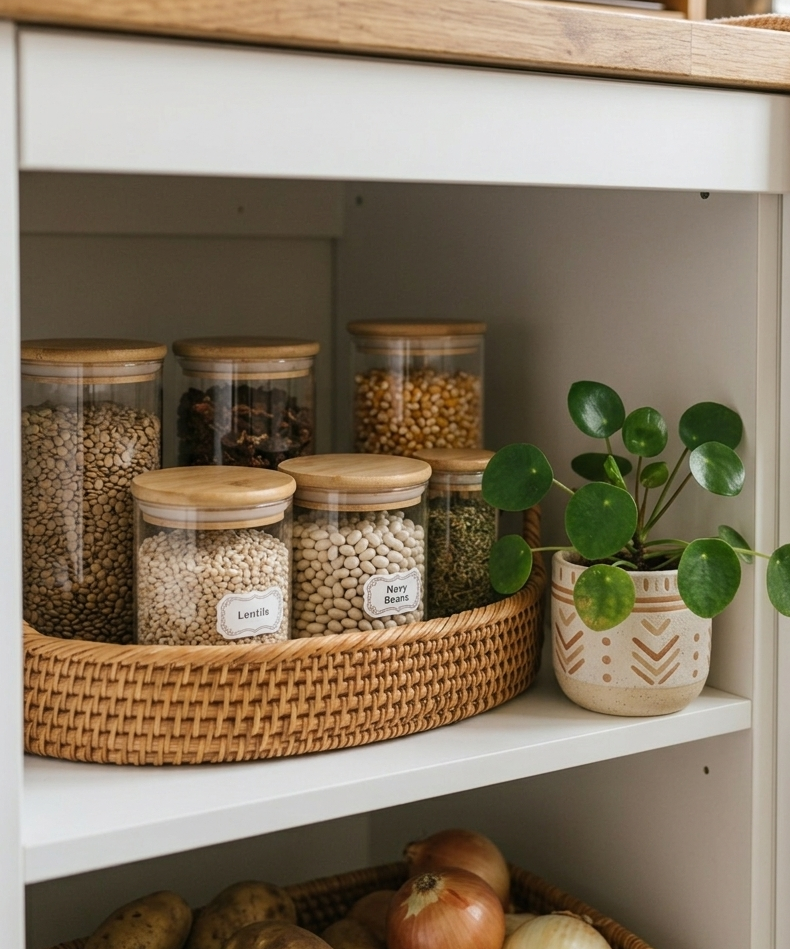
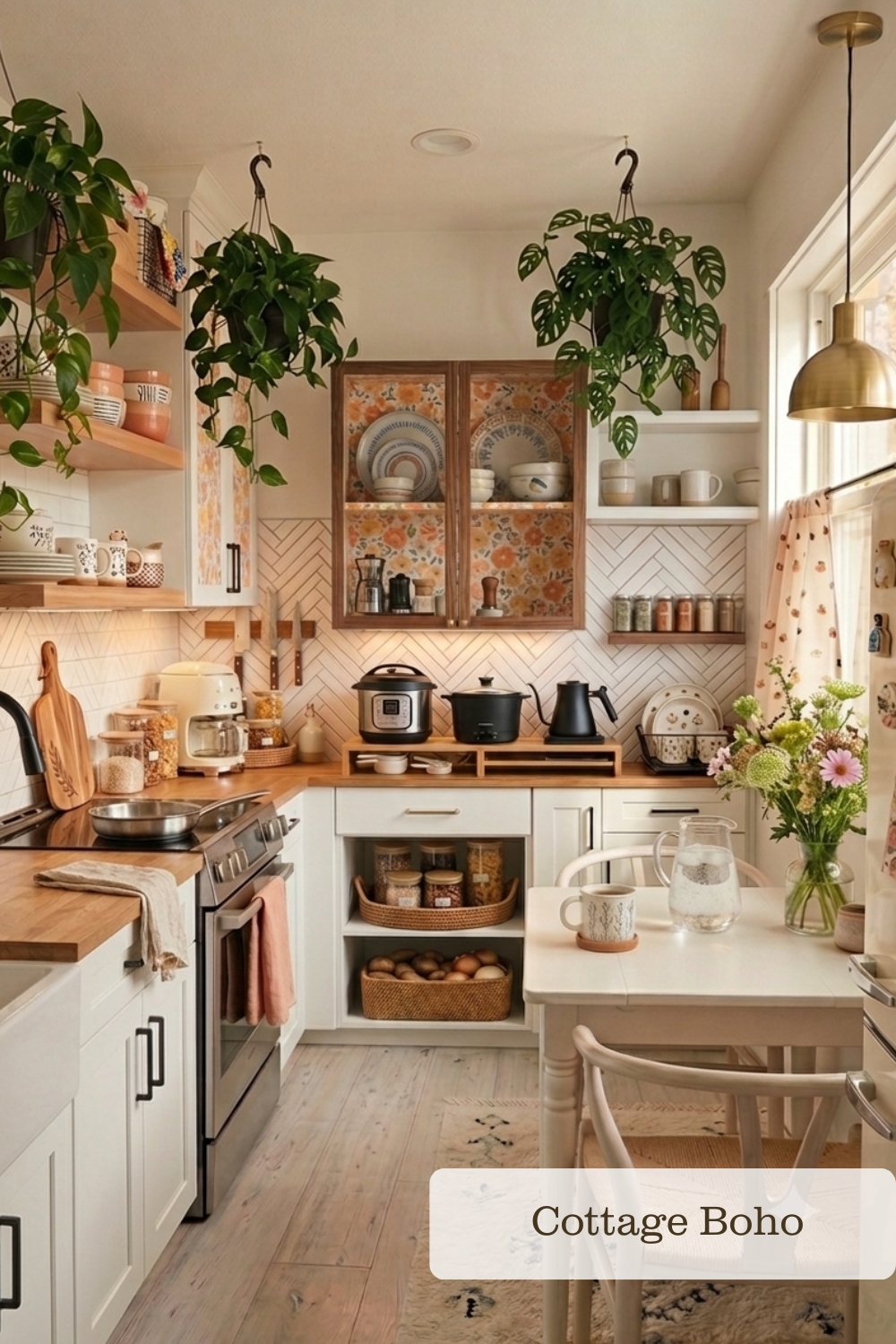
4. Woven Storage for Soft Texture
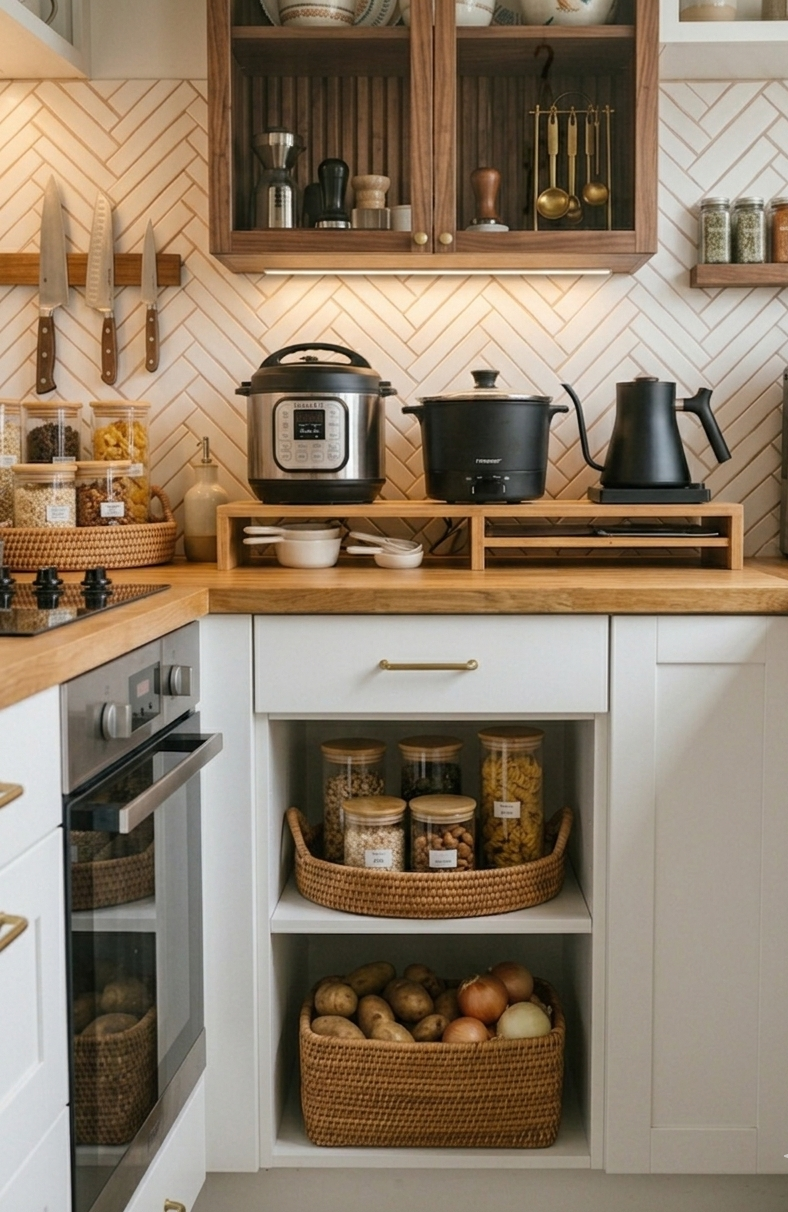
Baskets appear throughout the space for produce, pantry items, and small storage.
They soften the harder surfaces and add warmth without introducing clutter.
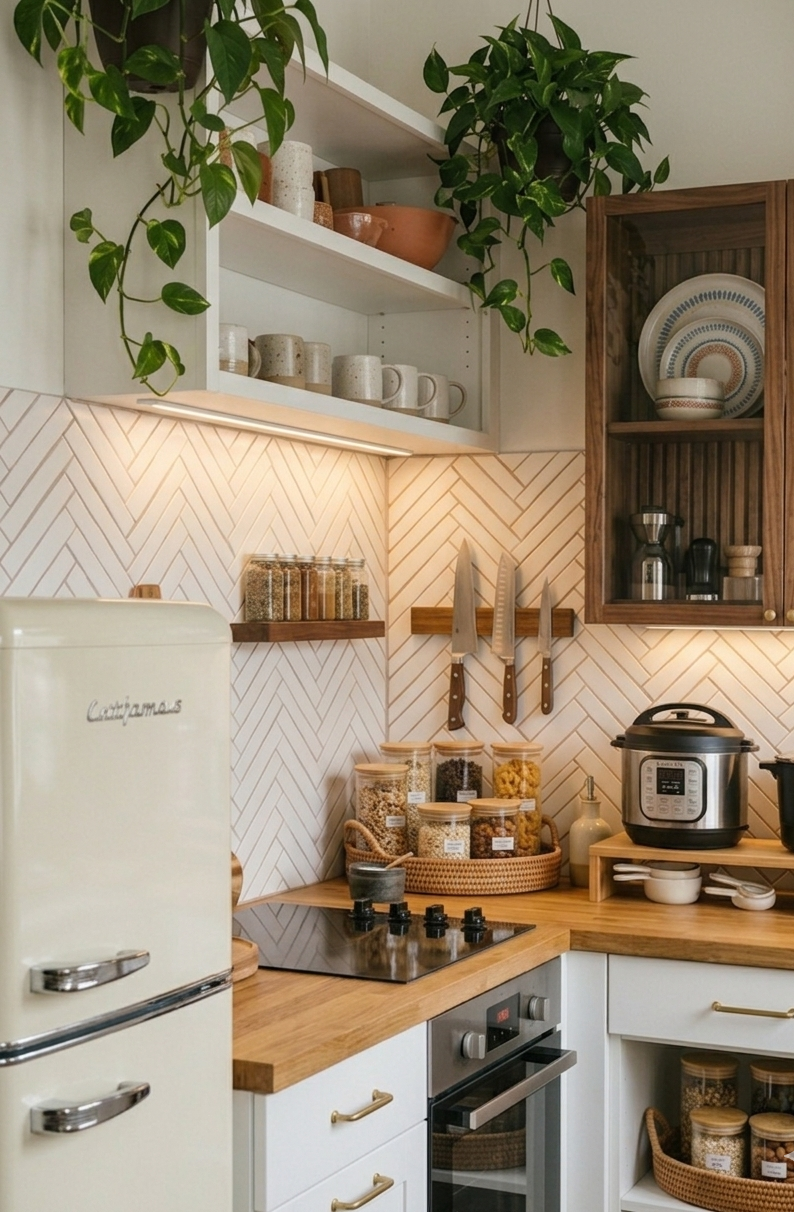
5. Open Shelves Kept Minimal
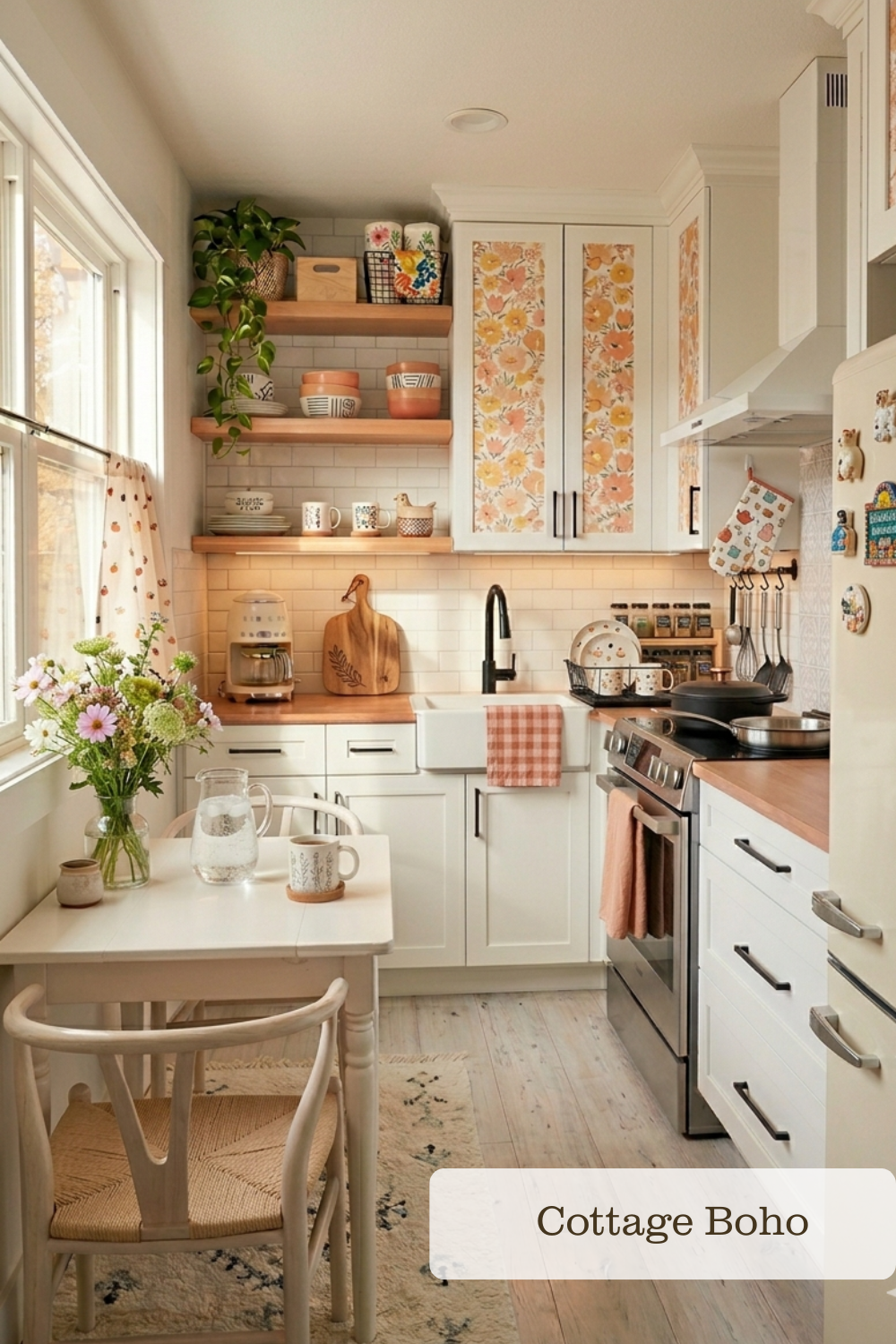
The shelving is styled lightly, with only a few selected pieces.
This prevents visual clutter and keeps the kitchen feeling open and balanced.
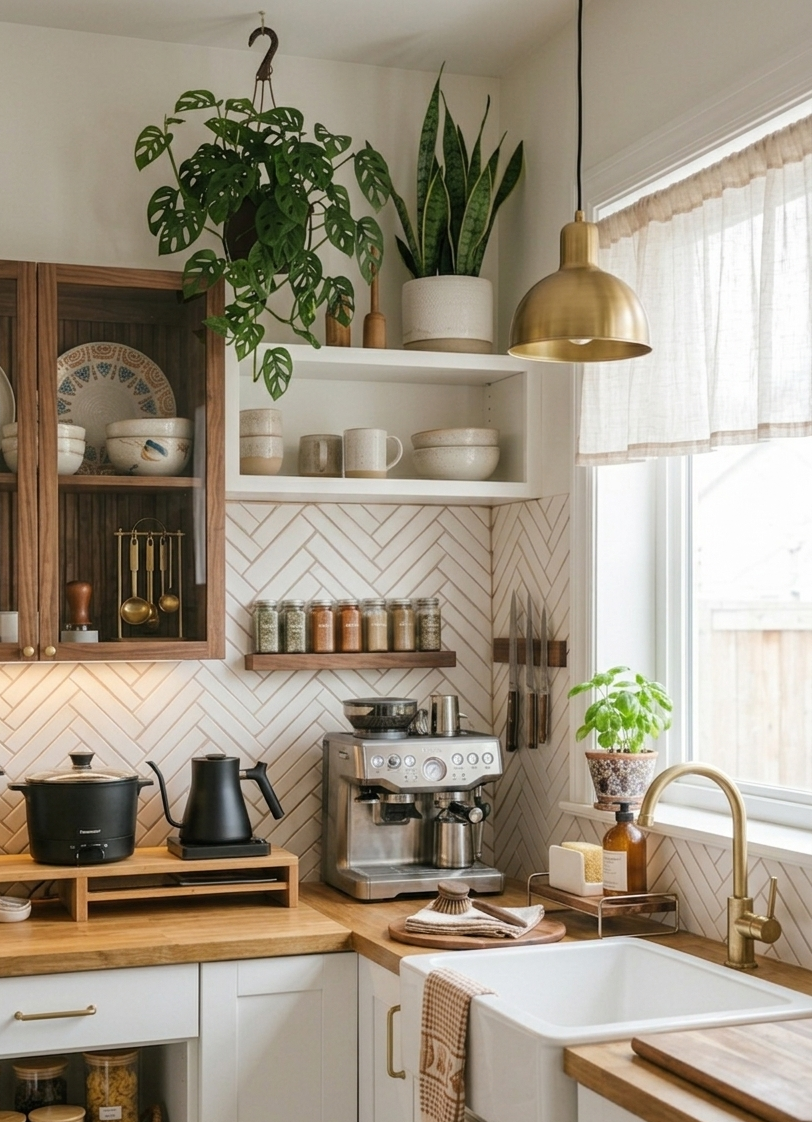
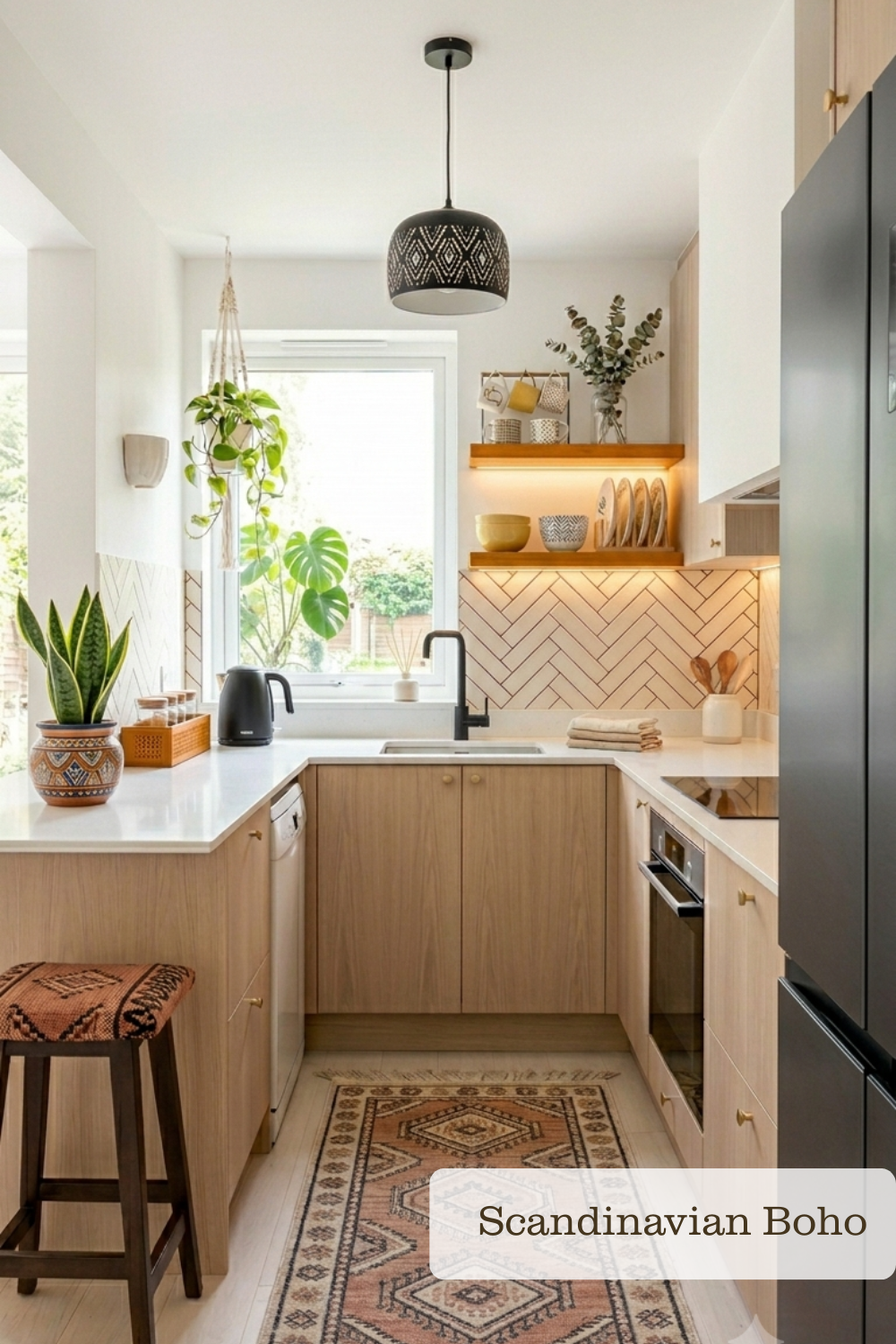
6. Brass Details That Warm the Space
Small brass handles and lighting fixtures quietly lift the overall palette.
They don’t stand out immediately — but they connect the warm tones across the room.
7. Retro + Modern Contrast
A vintage-style refrigerator sits beside modern appliances.
This mix keeps the kitchen from leaning too polished while still feeling functional for daily cooking.
8. Functional Tools as Display
Items like knives and wooden utensils are stored visibly.
Because they are well-made, they double as subtle visual elements.
9. Subtle Patterned Backsplash
The backsplash adds texture rather than color.
Its soft pattern gives depth to the wall without distracting from the rest of the kitchen.
10. Visible Produce as Decor
Fruit and vegetables are left in open baskets.
Instead of hiding them, the kitchen uses them as part of the visual layering.
11. Handmade Ceramic Pieces
Slightly imperfect ceramics add personality.
They break the uniformity of store-bought sets and make the space feel more personal.
12. Open + Closed Storage Balance
Closed cabinets hide the functional clutter.
Open shelves hold the everyday items.
This balance keeps the kitchen usable without feeling messy.
13. Soft Organic Shapes
Rounded baskets, curved ceramics, and trailing plants soften the straight cabinet lines.
This contrast is what makes the space feel relaxed.
14. Defined Counter Zones
Each part of the counter has a purpose:
Cooking, coffee, prep, and storage.
This prevents visual overlap in a small layout.
15. Glass Jars for Everyday Staples
Clear containers keep ingredients organized while doubling as visual texture.
Dry goods become part of the design.
16. Beauty + Function Together
Nothing is purely decorative.
Every object either stores, serves, or organizes something — which is why the space still feels clean.